Search for “how long to boil an egg” and Google often shows a box at the top with the answer already written out, then the name of the website below. That box is a featured snippet. SEO people nicknamed it “position zero”, because it sits above the first normal result.
Until January 2020, getting a featured snippet was a double win. The same page often appeared twice on page one: once in the snippet box and again as a normal blue link. On 22 January 2020 that stopped.
What changed on 22 January 2020
Danny Sullivan, Google's public Search Liaison, announced that if a web page listing is promoted into the featured snippet position, it would no longer repeat in the regular first page of search results. The change applied to results worldwide.
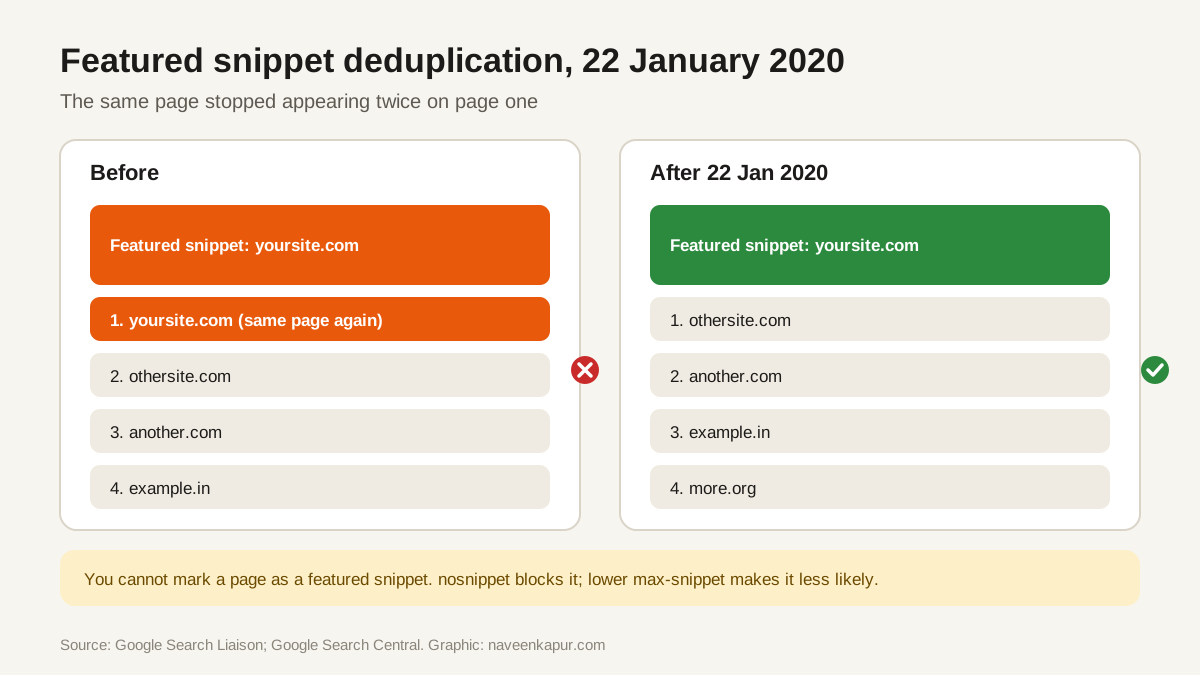
The page did not lose its place. The snippet simply became its one listing on the first page, instead of two.
Why it mattered for clicks
Many sites had treated the snippet as a bonus on top of a high normal ranking. After the change, winning a snippet sometimes meant fewer total clicks, because the snippet box shows the answer and some people do not click. Some site owners started asking whether a featured snippet was worth having at all.
There is no single answer. For a quick fact, the snippet may answer the question without a click. For a question that needs steps, examples or a decision, the snippet works like an advertisement for the page: people see a good start and click to read the rest.
What Google's documentation says today
Google's Search Central page “Featured snippets and your website” describes featured snippets as special boxes where the usual format of a result is reversed, showing the descriptive snippet first. They can also appear inside a “People also ask” group. The page is clear on two points:
- 1You cannot mark a page as a featured snippet. Google's systems decide whether a page would make a good featured snippet for a search.
- 2You can opt out. The nosnippet rule blocks all snippets, featured and regular. Text inside a data-nosnippet section will not appear in any snippet. To make a page less likely to be a featured snippet while keeping normal snippets, Google suggests trying lower max-snippet values, though only nosnippet is guaranteed.
How to give Google a snippet-worthy answer
There is no tag, but there is a pattern that makes a page easy to quote:
- Use the question as a heading. “How long does it take to renew a passport in India?”
- Answer in the first 40 to 60 words below it, in a complete sentence that makes sense on its own.
- Use lists for steps and tables for comparisons. Google often shows these as list or table snippets.
- Then give the detail: exceptions, examples, costs and links, so a reader has a reason to click.
- Keep it accurate and current. An outdated answer will lose the snippet to a fresher page.
Featured snippets in the age of AI answers
Featured snippets were Google's first big step toward answering questions on the results page. BERT improved how they were chosen from October 2019, every core update re-judges which pages deserve them, and AI Overviews took the idea further in 2024 by writing summaries from several pages. The same writing habits help in all three cases: a clear question, a direct answer, then useful depth.