
Most businesses do not lack marketing activity. They have a website, a Google Ads account, an Instagram page, maybe an agency doing SEO. What they lack is a clear answer to a simple question: which of this actually brings customers, and what should we do next?
That question is what a digital marketing consultant is hired to answer. This guide explains what the work involves, how it differs from hiring an agency or a freelancer, the signs that you need one, and how to choose well.
What a digital marketing consultant does
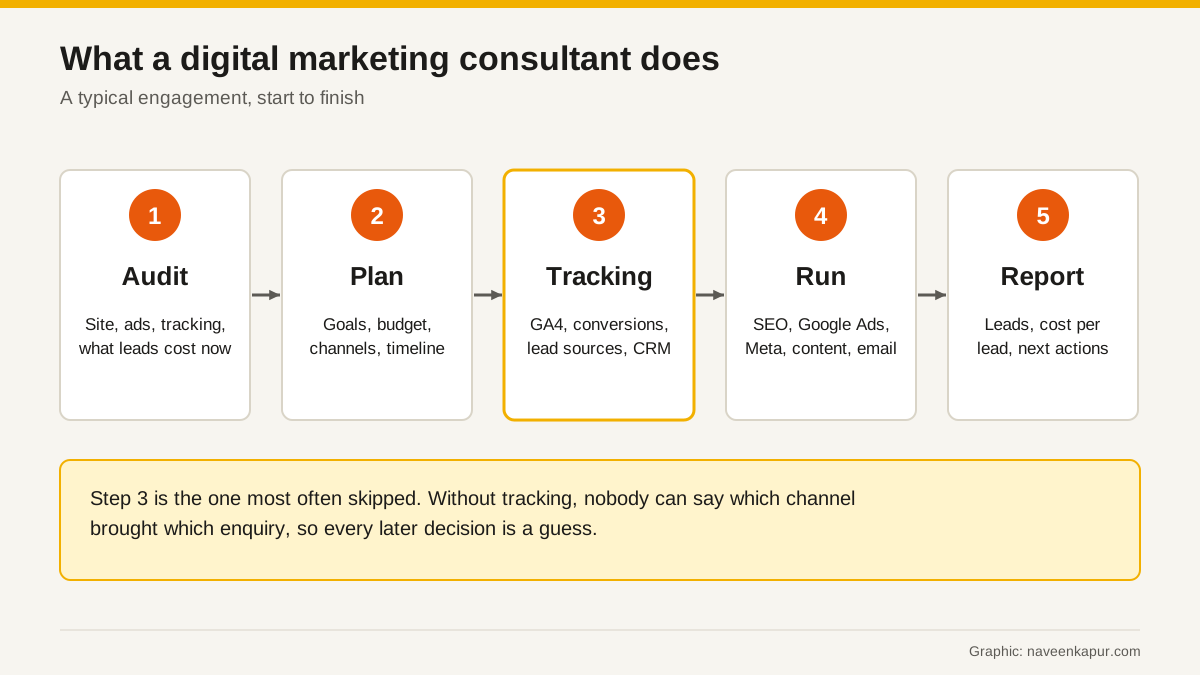
1. Audit what you have
The work starts by looking at everything: the website (speed, structure, SEO health), Google Ads and Meta Ads accounts, Google Business Profile, social media, email, and how enquiries are handled once they arrive. The aim is to find what is working, what money is being wasted, and what is missing.
2. Build a plan
A plan turns the audit into decisions: what the business wants (more enquiries, more sales, a new city, a new product), which channels fit that goal, how much to spend on each, in what order, and how success will be measured. A good plan also says what not to do.
3. Set up tracking
This is where many businesses fall short. If a form fill, call or WhatsApp click is not recorded with its source, every later decision is a guess. Tracking usually means Google Analytics 4 with key events for leads (Google's recommended event list includes generate_lead), conversion tracking in Google Ads, and a CRM or sheet that records where each lead came from.
4. Run or guide the work
Some consultants run campaigns themselves. Others guide your in-house team or your agency and review their work. Either way, the consultant stays responsible for the plan and checks that the work follows it.
5. Report and adjust
Reports should answer business questions: how many leads, from where, at what cost, and how many became customers. Then the plan is adjusted: more budget where it works, less where it does not.
Consultant, agency or freelancer?
| Consultant | Agency | Freelancer | |
|---|---|---|---|
| Main focus | Strategy, direction, checking results | Running campaigns and content at scale | A specific task or channel |
| Best when | You need a plan, an outside view, or someone to manage your agency | You need many hands for execution | You know exactly what task you need done |
| Typical scope | Audit, plan, tracking, oversight; sometimes execution | Execution across channels | One job: ads, design, posts, writing |
| Watch out for | Advice with no follow-through | Juniors on your account; reports full of vanity numbers | No strategy above the task |
These are not either-or choices. A common setup is a consultant who sets the plan and the measurement, with an agency or freelancers doing the day-to-day execution.

Signs your business needs one
- You spend on ads, SEO or social media every month but cannot say which one brings paying customers.
- Leads come in but sales say “the quality is poor”, and nobody can show where the poor leads come from.
- You have changed agencies more than once and the results feel the same.
- Traffic or enquiries dropped and nobody can explain why (a Google update, a site change, a tracking break?).
- You are about to spend a large budget, launch in a new city, or redesign the website, and want a plan first.
- Your team is good at doing the work but nobody owns the overall direction.
What a digital marketing consultant should not promise
Some promises are red flags in any marketing role:
- Guaranteed rankings. Google's own guidance says no one can guarantee a #1 ranking on Google. See our guide on how to choose an SEO consultant.
- Fixed lead numbers before seeing your data. A sensible forecast comes after the audit, as a range, with assumptions written down.
- Secret methods. You should understand what is being done and why.
- Ownership tricks. Your website, ad accounts, Analytics, Search Console and content should belong to you, with the consultant given access.
Questions to ask before you hire
- 1Can you show me past work I can check for myself, and explain what you changed?
- 2What will you look at in the first month, and what will I receive at the end of it?
- 3How will we measure success: leads, cost per lead, sales? Over what time?
- 4Will you run the work, or guide my team or agency? Who exactly does what?
- 5How will you set up tracking for forms, calls and WhatsApp enquiries?
- 6Which accounts will I own, and what access will you need?
- 7How often will we review results, and what happens if a channel is not working?
- 8Which channels would you not recommend for my business, and why?
How consultants usually charge
Common models are a fixed fee for an audit and plan, a monthly retainer for ongoing strategy and oversight, an hourly or daily rate for advice, and, for ad management, a monthly fee that may depend on ad spend. Whatever the model, ask for the scope in writing: what is included, what is not, and what you will receive each month.
Choosing someone local
Searching for a “digital marketing consultant in Delhi” or in your own city makes sense when you want face-to-face planning sessions or when local knowledge matters, such as Google Maps and local search. The same questions apply wherever the consultant is based. Experience in your type of business, honest measurement and clear communication matter more than a postcode.