For years, SEO people talked about E-A-T: Expertise, Authoritativeness and Trustworthiness. On 15 December 2022 Google's Search Central blog announced that E-A-T was gaining an extra E, for Experience. The post was written by Elizabeth Tucker of Google Search.
The change sounds small. It says a lot about what Google wants to show: not just pages written by qualified people, but pages written by people who have actually done the thing.
What each letter means
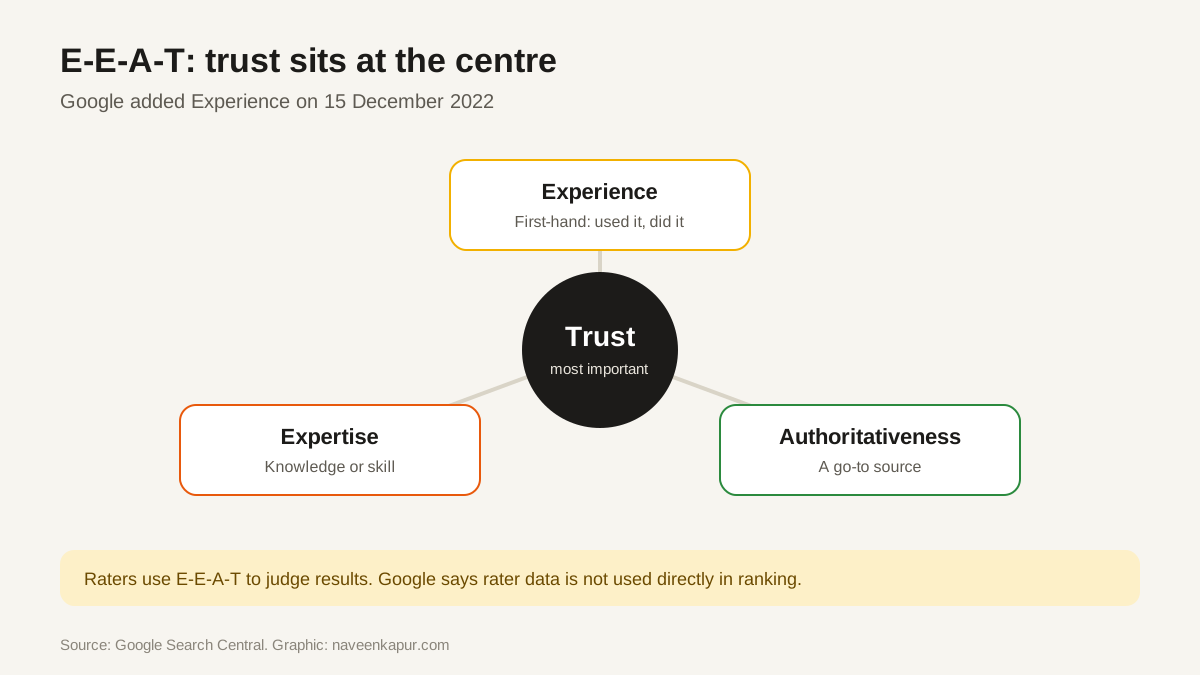
- Experience
- Does the content show first-hand experience? For example, having actually used a product, stayed at a hotel or gone through a process.
- Expertise
- Does the creator have the knowledge or skill the topic needs? A doctor on medicine, a chartered accountant on tax.
- Authoritativeness
- Is the creator or website known as a go-to source on the topic?
- Trustworthiness
- Is the page accurate, honest, safe and reliable? Google says this is the most important part.
Google's own example: tax returns vs tax software
In the December 2022 post, Google gave a clear example. If you want to know how to fill out your tax return correctly, you probably want content from an expert in accounting. But if you want reviews of tax preparation software, you may want something different: perhaps a forum discussion from people who have used different services.
Both are helpful. They show different strengths. Experience and expertise are not the same thing, and the best page for a search depends on what the person needs.
What E-E-A-T is not
- It is not a ranking score. There is no E-E-A-T number inside Google. It is a concept raters use to judge results.
- Raters do not rank your site. Google says rater data is not used directly in its ranking algorithms. Raters help Google test whether its systems work.
- It is not an author bio trick. Adding “expert” to a bio does nothing if the content shows no real knowledge.
- It is not only for medical sites. It matters most for topics that affect health, money or safety, but it applies to every topic.

Who, How and Why: Google's self-check
Google's page “Creating helpful, reliable, people-first content” gives three questions that turn E-E-A-T into something practical:
| Question | What Google means | What to do |
|---|---|---|
| Who created it? | Readers should be able to see who wrote it | Add a byline that links to a real author page with background |
| How was it created? | Explain your process where readers would expect it | Say how you tested, where data came from, and whether automation or AI helped |
| Why was it created? | Google calls this the most important question | Make it to help people, not mainly to attract search traffic |
How to show E-E-A-T on your pages
- 1Show first-hand proof. Your own photos, test results, screenshots, prices you paid, steps you took.
- 2Name the author. A real person with a profile page that shows their background and how to contact them.
- 3Get facts right and date them. Link to official sources, update pages when things change, and show the update date.
- 4Be clear about the business. An About page, contact details, address and policies build trust.
- 5Separate facts from opinions and ads. Label sponsored content, affiliate links and reviews clearly.
- 6Write within your real knowledge. A plumber writing about plumbing beats a plumber writing about mutual funds.
Where E-E-A-T fits with Google updates
E-E-A-T explains the thinking behind several Google systems. The helpful content update of 2022 and the core updates that followed all push in the same direction: reward content made for people, by people who know the subject. The latest Search Quality Rater Guidelines, revised on 11 September 2025, still use the same E-E-A-T framework.
With AI Overviews and AI Mode summarising the basics, first-hand experience is also one of the few things a summary cannot replace. It gives readers a reason to visit your page.