Search for “best air purifier for Delhi” and, for years, many top results looked the same: a list of ten products, a paragraph copied from each maker's website, and a “Buy now” button with an affiliate link. Nobody had used the products. On 8 April 2021, Google set out to change that with the product reviews update.
What Google announced
Google's post, by software engineer Perry Liu and Search Liaison Danny Sullivan, said people appreciate product reviews that share in-depth research, rather than thin content that simply summarises a bunch of products. The update was an improvement to Google's ranking systems to better reward such content. It went out the same day and, at first, only involved English-language reviews.
Google said this was separate from its regular core updates, but that its core update advice applied here too. The focus: content that provides insightful analysis and original research, written by experts or enthusiasts who know the topic well.
The questions Google asked reviewers
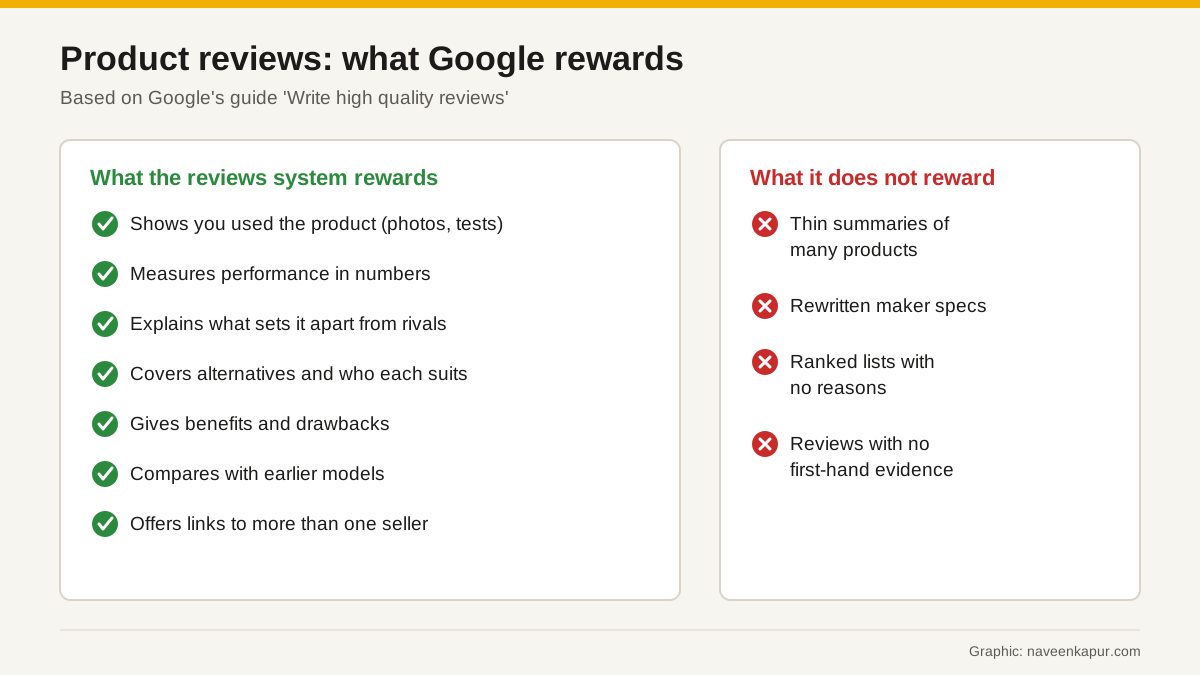
Google gave a list of questions for review writers. In short, does your review:
- Express expert knowledge about the product?
- Show what the product is like physically, or how it is used, with content beyond what the maker provides?
- Give quantitative measurements of how it performs?
- Explain what sets it apart from competitors?
- Cover comparable products, or say which product is best for which use?
- Discuss benefits and drawbacks, based on research?
- Describe how it has changed from earlier models?
- Identify the key decision factors for that kind of product and rate it on them? (Google's car example: fuel economy, safety and handling.)
- Describe key design choices and their effect on users, beyond what the maker says?
Every update since April 2021
| Date | Update |
|---|---|
| 8 Apr 2021 | First product reviews update (English) |
| 1 Dec 2021 | December 2021 product reviews update |
| 23 Mar 2022 | March 2022 product reviews update |
| 27 Jul 2022 | July 2022 product reviews update |
| 20 Sep 2022 | September 2022 product reviews update |
| 21 Feb 2023 | February 2023 product reviews update |
| 12 Apr 2023 | April 2023 reviews update (renamed: no longer only products) |
| 8 Nov 2023 | November 2023 reviews update |
Notice the change of name in April 2023: from then on the updates were called reviews updates, not product reviews updates. Google's current documentation says reviews can be about products such as laptops or winter jackets, media such as films or video games, or services and businesses such as restaurants or fashion brands.
How the reviews system works today
Google's page “Google Search's reviews system and your website” sets out the current rules:
- It evaluates first-party review content: articles, blog posts and pages written to recommend, give an opinion on, or analyse something. It does not evaluate third-party reviews, such as customer reviews in the reviews section of a product page.
- It works mainly page by page. But for sites with a substantial amount of review content, any content on the site might be evaluated. A site with only a few reviews is unlikely to get a site-wide evaluation.
- It covers many languages. Google lists English, Spanish, German, French, Italian, Vietnamese, Indonesian, Russian, Dutch, Portuguese and Polish.
- It is improved regularly. Google says the reviews system is improved at a regular and ongoing pace, so there are no longer big announced reviews updates.
- Recovery is possible. Content affected by the reviews system may recover over time if you improve it.
How to write a review that the reviews system rewards
Google's help page “Write high quality reviews” turns the 2021 questions into best practices. The ones that matter most:
- 1Show evidence of real use. Google asks for visuals, audio or other links showing your own experience with what you review. Your own photos and videos beat stock images and maker renders.
- 2Measure. Battery hours, noise in decibels, time to cook, rupees per month to run. Numbers you measured yourself are hard to copy.
- 3Compare. Say what sets the product apart and which alternative suits which buyer.
- 4Give both sides. Benefits and drawbacks, from your own research.
- 5Explain your “best”. If you call something the best overall or best for a purpose, Google asks you to say why, with first-hand evidence.
- 6Make ranked lists stand on their own. A “top 10” page needs enough useful content for each item, even if you also write separate full reviews.
- 7Offer more than one seller. Google suggests considering links to multiple sellers so readers can buy where they like.
A simple structure for a review page
- 1Who this is for: one or two sentences on the buyer and the job the product does.
- 2How we tested: how long you used it, where, and what you measured.
- 3Results: your measurements, photos and short observations.
- 4Strengths and weaknesses: honest, specific, from your own use.
- 5Compared with: two or three real alternatives and who should pick each one.
- 6Verdict: who should buy it, who should not, and why.
- 7Where to buy: links to more than one seller, marked rel="sponsored" if they earn you commission.
Why this matters even if you are not a review site
Many business blogs publish comparison pages: “Zoho vs Salesforce”, “best CRM for small business”, “top coaching institutes in Delhi”. These are reviews in Google's eyes. The same rules apply. Write them from real experience, show your evidence, and be fair about the drawbacks. It is the same idea Google calls E-E-A-T, especially the first E for experience.