Many Indian businesses and colleges hire a digital marketing manager after a year of mixed results from agencies and freelancers. The hope is that one person will finally take charge. Sometimes that works very well. Sometimes the company ends up with a person who posts on Instagram, forwards agency reports and cannot say what a lead costs.
This guide is for owners and heads of admissions or sales who are about to hire. It covers what the role should own, the skills to look for, the KPIs to judge it by, a 30/60/90 day plan, interview questions with good answers, and when a consultant or agency fits better. If you are weighing outside help instead, our guide on what a digital marketing consultant does covers that side.
Digital marketing manager roles and responsibilities
A digital marketing manager is responsible for results from online channels. The person may run some campaigns personally, but the core job is to decide, coordinate and measure. In most small and mid-sized businesses, the role owns six things.
- 1Channels. Which channels to use and why: Google Search, Meta (Facebook and Instagram), YouTube, SEO, WhatsApp, email, Google Business Profile. Also which ones to stop.
- 2Budget. How the monthly spend is split, moved and justified, based on what each channel brings in, not on habit.
- 3Agencies and freelancers. Writing briefs, checking work, holding them to agreed numbers and making sure the business owns its ad accounts, pages and data.
- 4Tracking. GA4 key events, ad platform conversions, UTM rules and call or WhatsApp tracking, so every lead has a known source.
- 5CRM handoff. Making sure every lead reaches the sales or admissions team in the CRM quickly, with its source, and that results come back so marketing can see which leads closed.
- 6Reports. One monthly report that the owner can read in five minutes: spend, enquiries, visits, admissions or sales, and cost per result by channel.
Notice what is not on the list: “manage social media pages” as the main job. Posting is a task. The role is about the whole funnel from ad to admission or sale.
Digital marketing manager skills
Look for a mix of numbers, platforms and people skills. Very few people are strong in all of them, so decide which ones matter most for your business.
- Numbers. Comfortable with spreadsheets, cost per result, conversion rates and simple forecasts. Can explain why a cheaper lead may be the more expensive admission.
- Platform knowledge. Knows Google Ads, Meta Ads Manager and GA4 well enough to check an agency’s work, even if someone else does the daily changes.
- Tracking and CRM sense. Understands how a form submission becomes a CRM record, and how the result can be sent back to ad platforms.
- Writing and briefs. Can write an ad, a landing page brief and a clear brief for designers and agencies.
- Vendor management. Can say no to an agency, ask for raw data and negotiate scope.
- Business understanding. Knows your fee structure or price list, your season and your sales or counselling process.
Certifications help as a basic filter. Google’s Skillshop offers free Google Ads training, with certifications such as Search, Display, Video and Measurement. Google Ads Help says you need at least 80% to pass, each assessment has 75 minutes, and a certification lasts one year before you must retake it. Meta’s Blueprint Certification Hub lists role-based exams such as Digital Marketing (100-101) and Media Buying (410-101). A certificate shows someone studied the platform. It does not show they produced results, so always ask for numbers too.
KPIs that matter (and ones that do not)
| KPI | What it tells you | Use it? |
|---|---|---|
| Cost per enquiry | Spend divided by genuine enquiries (calls, forms, WhatsApp chats) | Yes, by channel and by campaign |
| Cost per admission or sale | Spend divided by paid admissions or closed sales | Yes, the main number |
| Lead-to-sale rate | Share of enquiries that became admissions or sales | Yes, shows lead quality and sales follow-up |
| Speed to first contact | Time from enquiry to first call or message | Yes, a CRM handoff check |
| Click-through rate, cost per click | How ads perform before the click | Only as a diagnostic, not a goal |
| Likes, followers, impressions | Reach and attention | No, not as a performance KPI |
For example, say Meta brings enquiries at Rs 300 and Google at Rs 900. If 2 in 100 Meta enquiries become admissions and 10 in 100 Google enquiries do, the cost per admission is Rs 15,000 on Meta and Rs 9,000 on Google. These numbers are only an example, but the sum is why a manager must see results from the CRM, not just the ad dashboard.
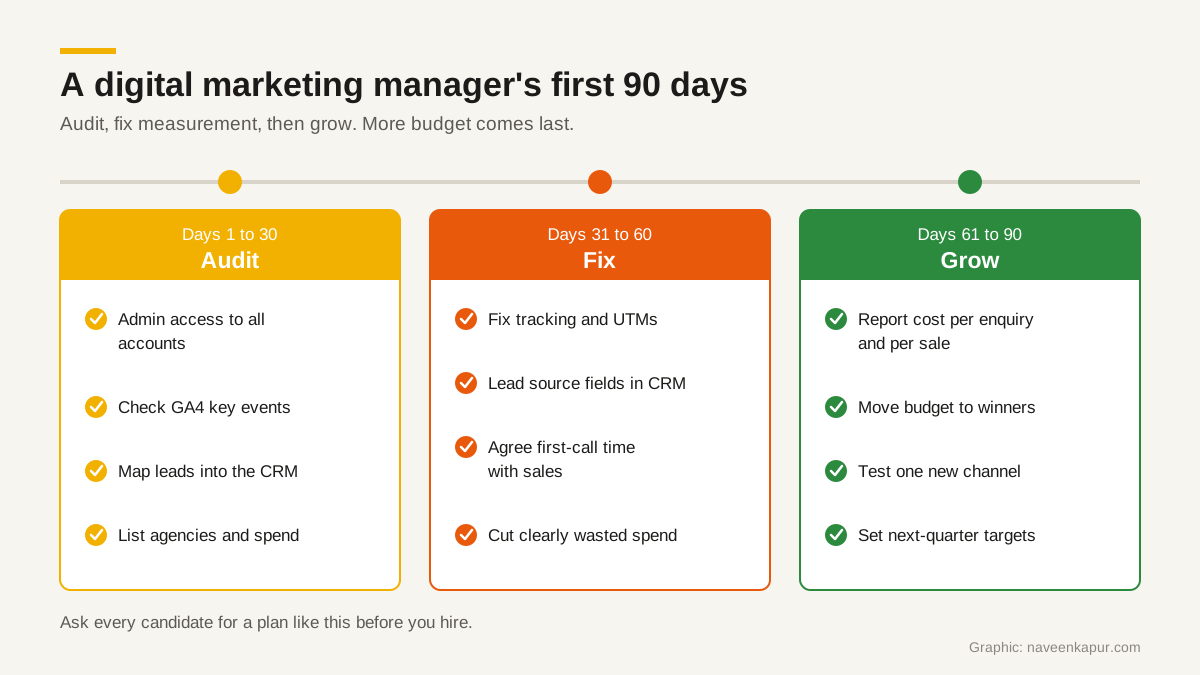
A 30/60/90 day plan for a new manager
Ask every candidate for a plan like this. A good one starts with access and measurement, not new campaigns.
Days 1 to 30: audit
Get admin access to every account (Google Ads, Meta Business, GA4, Google Business Profile, website, CRM) in the company’s name. List all agencies, freelancers and monthly spend. Check whether GA4 key events and ad conversions fire correctly. Map how a lead travels from each form, call or chat into the CRM, and how long it waits for a first call.
Days 31 to 60: fix
Fix tracking gaps, write one UTM naming sheet, add lead source and campaign fields in the CRM, and agree a first-contact time with the sales or admissions team. Pause spend that clearly brings no enquiries. Our GA4 setup checklist is a good base for this step.
Days 61 to 90: grow
Send the first full report with cost per enquiry and cost per admission or sale by channel. Move budget towards what works. Test one new channel, audience or offer, not five. Agree targets for the next quarter with the owner.

Interview questions and what a good answer looks like
| Question | A good answer includes |
|---|---|
| What did a lead and a sale cost in your last role, by channel? | Actual figures or ranges, how they were calculated, and where the sales data came from |
| How do you know a lead came from a Google ad and later paid? | Auto-tagging, GCLID or UTM values saved on the CRM record, and results sent back to Google Ads as offline conversions |
| An agency says leads are up 50% but sales are flat. What do you do? | Check lead quality in the CRM, look at source and campaign, listen to calls, review targeting and search terms |
| Which GA4 events would you mark as key events for us? | Form submit, call click, WhatsApp click, booking, not page views or scrolls |
| Who should own our ad accounts? | The business, with agencies given access, never the other way round |
| What would you stop doing in month one? | A specific, reasoned cut based on data, not “nothing” |
In-house manager vs consultant vs agency
| In-house manager | Consultant | Agency | |
|---|---|---|---|
| Best for | Steady spend across several channels, daily coordination | Strategy, setup, audits and checking agencies a few hours a week | Daily execution: ads, design, content, at volume |
| Cost shape | Monthly salary plus tools | Retainer or per project | Monthly fee, often plus a share of spend |
| Knows your business | Deeply, over time | Well, through focused work | Varies with the account team |
| Main risk | One person’s skill gaps | Limited hours | Reports that show activity, not results |
If your Google Ads alone need specialist hands, see how to hire a Google Ads expert. If you need a senior person to set the plan and hold agencies to account without a full-time salary, a consultant often fits better than a manager at the start.
Red flags when you hire a digital marketing manager
- Reports only likes, followers, reach or impressions.
- Cannot explain how a lead is tracked from ad to sale.
- Wants ad accounts created in their own or an agency’s name.
- Promises page one rankings or a fixed number of leads before seeing your data.
- Asks for more budget before fixing tracking.
- Has never spoken to a sales or admissions team about lead quality.
A good digital marketing manager makes the business less dependent on guesswork. If you want help defining the role, checking candidates or covering the gap until you hire, the digital marketing service page explains how that work is done.