
Follow one student through a typical Indian college's admission. Marketing runs a campaign; the enquiry lands in a portal dashboard. Admissions copies it into a sheet and a counsellor calls. The student pays the admission fee through a payment link; accounts sees it in the bank statement two days later. The registrar collects documents and types the same details into the college ERP. If the student withdraws, the refund is tracked in an email thread.
Four offices, four versions of the student. Nobody is careless; each office uses the tool it was given. The result is predictable: lost leads, duplicate calls, payments that cannot be matched, angry parents waiting for refunds, and a marketing team that cannot say which campaign produced students. An admission management system fixes this only if it is designed around one student record.
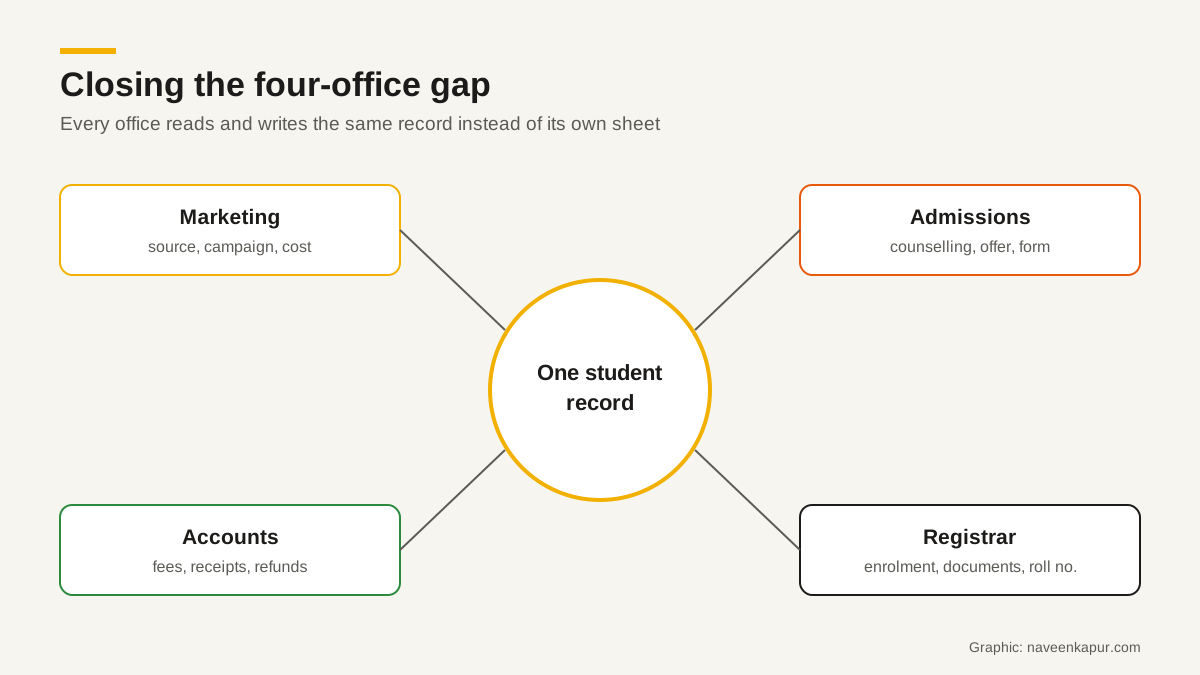
What each office needs from the record
| Office | Owns these fields | Needs to see |
|---|---|---|
| Marketing | Source, medium, campaign, cost data | Which leads applied, paid and enrolled |
| Admissions | Counsellor, stage, counselling notes, application, offer | Payment status, document status |
| Accounts | Fee invoices, receipts, concessions, refunds | The offer and the agreed fee |
| Registrar | Verified documents, eligibility, enrolment, roll number | Application details, payment confirmation |
Where the gaps appear
Gap 1: marketing to admissions
The lead arrives without its source, or with “portal” and nothing more. From that moment, no report can link spend to students. Fix: every lead source creates the record automatically with source, medium and campaign. For web enquiries, use consistent UTM tags; our GA4 setup checklist explains how. For portals and fairs, map each to a fixed source value. If campaigns run on Google Ads, the fee-paid stage can later be sent back as an offline conversion, which is how a Google Ads expert makes campaigns learn from real students.
Gap 2: admissions to accounts
A counsellor promises a scholarship or concession on the phone. Accounts bills the full fee. The parent calls the principal. Fix: offers and concessions are recorded on the student record, with an approver, before a payment link is generated. Accounts bills from the record, not from a message.
Gap 3: accounts back to admissions
The student has paid, but the counsellor keeps calling because the payment is not visible. Fix: payment gateway confirmation updates the stage to “fee paid” automatically, verified on the server rather than trusted from the payment page, and sends a receipt. Admissions stops chasing paid students.
Gap 4: admissions to the registrar
The registrar asks for the same documents again and retypes the form into the ERP. Fix: documents uploaded during application are attached to the record, the registrar marks each as verified or not, and the enrolment creates the student in the student information system with the same ID. Our guide to student information system vs CRM covers that hand-off.
Gap 5: withdrawals and refunds
A student withdraws in August. Accounts, admissions and the registrar each handle part of it, and the refund takes months. For universities and colleges under UGC, the rules are clear. UGC's notice for 2025-26 keeps its earlier fee refund policy in force: a full refund of fees for withdrawals up to the notified cut-off date, with no more than Rs 1,000 deducted as a processing fee. UGC's 2018 notification sets a sliding scale for later withdrawals and states that taking original certificates into institutional custody under any circumstance is strictly prohibited.
Fix: a withdrawal is a stage on the same record, with the date the request was received, the refund amount calculated by your policy, an approver and a paid date. Everyone sees the same status. Our fee management system guide covers refunds and fines in more detail.

Design rules for one student record
- 1One student ID, created at the first enquiry or application, used by every office and system.
- 2One owner per field. Admissions cannot change a receipt; accounts cannot change a counselling note.
- 3Stages with owners. Each stage change is made by the office responsible, with a date.
- 4Automatic updates between offices. Payment confirmation, document verification and enrolment change the stage without a phone call.
- 5Approvals on the record. Concessions, waivers and refunds need a named approver, recorded.
- 6Consent recorded. Who agreed to what and when, including a parent's consent for students under 18 under India's DPDP Act, 2023.
- 7Reports from enquiry to enrolment. Built on the record, not on a monthly merge of sheets.
Does this need one product?
Not necessarily. Many institutes use an admissions CRM for marketing and admissions, an accounting system or ERP for fees, and a student information system for the registrar. That works if the systems share a student ID and pass statuses automatically. What does not work is four systems with four IDs joined by people copying data.
How to get four offices to agree
The software is the easy part. The hard part is agreement between four heads of department who have each run their office their own way for years. A practical way to get there:
- 1Hold one meeting with all four heads and draw the student's journey on a whiteboard, from first enquiry to enrolment and, if needed, refund.
- 2Mark every point where information moves from one office to another. Those are your hand-offs.
- 3For each hand-off, agree what triggers it, what information moves, and who confirms it.
- 4Write a one-page field ownership list: which office edits which fields.
- 5Agree three reports that every head will look at weekly, built from the shared record.
- 6Pilot with one programme for one admission cycle before rolling out to all. An outside CRM consultant can run this workshop if no one inside is neutral.
Expect resistance in two places. Accounts often worries that admissions will see or change financial data; field ownership solves that, because admissions can read payment status but not edit it. The registrar often worries about data quality from the application form; document verification as a separate, registrar-owned step solves that. When each office keeps control of what it is responsible for, sharing the record stops feeling like a threat.
What to measure once it works
- Enquiry to enrolled conversion, by source and counsellor
- Cost per admission by channel
- Days from fee paid to enrolment confirmed
- Open document verifications and open refunds, with age
- Concessions given, by approver
None of this needs exotic technology. It needs agreement between four heads of department on who owns what, and a system set up to match. For the admissions side in detail, read CRM for colleges. To see how such a setup is planned and built, visit the colleges and universities service page.